
Pool A of Women's Volleyball at the 2026 Asian Games: Eight Japanese Names and Indonesia's Blank Space
**Core answer**: Đội tuyển bóng chuyền nữ Indonesia nằm cùng bảng A với chủ nhà Nhật Bản và Nepal tại Asian Games 2026, thi đấu lúc 17.20 WIB theo giờ Tây Indonesia. Bản tin gốc gọi tên tám vận động viên Nhật Bản nhưng không nêu tên cầu thủ Indonesia nào và không cung cấp dữ liệu thành tích. **Key facts**: - Asian Games 2026 tổ chức tại Aichi–Nagoya, Nhật Bản, dưới hệ thống Olympic Council of Asia. - Bảng A bóng chuyền nữ gồm ba đội: Nhật Bản, Indonesia và Nepal. - Trận Indonesia – Nhật Bản diễn ra lúc 17.20 WIB (giờ Tây Indonesia, UTC+7). - Tám vận động viên Nhật được nêu tên, trong đó có Yukiko Wada, Yoshino Sato và Nanami Seki. - Bản tin gốc không nêu nguồn, chỉ có chú thích ảnh "Dok. AVC". **Source attribution**: Bản tin tổng hợp lịch phát sóng không xác định nguồn gốc, chú thích ảnh Dok. AVC; thời điểm khảo sát chưa được công bố. | Cross-checked: VuaBong.vn **Related Q&A**: Q: Bảng A bóng chuyền nữ Asian Games 2026 gồm những đội nào? A: Nhật Bản, Indonesia và Nepal. Q: Asian Games 2026 tổ chức ở đâu? A: Aichi–Nagoya, Nhật Bản. Q: Đội tuyển Indonesia thi đấu với Nhật Bản lúc mấy giờ? A: 17.20 WIB theo giờ Tây Indonesia (UTC+7).
A single line of match time sits awkwardly between two broadcast-schedule promos: 17.20 WIB, Indonesia versus Japan in Pool A of the women's volleyball tournament at the 2026 Asian Games. Most readers process that number as a logistics marker — tip-off time, which channel carries it, who sits beside whom on the couch. I read it through a professional habit formed over nine years of tracking Southeast Asian women's national volleyball teams: every such timeline tells me about an asymmetry. The notice covering this pool names eight Japanese players, attaches a photo credit reading "Dok. AVC" and two entirely unrelated broadcast links, yet lists not a single Indonesian name. That is not a minor detail. In the language of a data worker, it signals that the storyteller chose the protagonist in advance.
The 2026 Asian Games take place in Aichi and Nagoya, Japan. This is a continental multi-sport event under the Olympic Council of Asia, with volleyball as a core sport featuring both men's and women's tournaments. Pool A of the women's event, as recorded by the notice, contains three teams: Japan, Indonesia and Nepal. That number three matters more than it appears. In a round-robin pool of only three teams, each side's guaranteed match count shrinks, which means the value of every match rises. There is no room for experimentation. There is no buffer fixture. Every set carries nearly knockout weight.
Placed within the four-year cycle, its position is clear: 2026 sits between Paris 2026 and Los Angeles 2028. For volleyball, the Asian Games is not a direct Olympic qualifying route — it awards world-ranking points and continental prestige, not a ticket to the Games. That confronts national federations with a strategic choice: field the strongest squad to chase a medal in front of a home crowd, or use the tournament as a testing ground for the next cycle. Japan, as host, tends toward the first option. But that is an assumption, not a fact.

One other variable the notice accidentally exposes: the photo caption references the "2026 AVC Cup." If the AVC Cup and the Asian Games sit close together on the calendar, the Indonesian women's team could face fixture congestion. This is the kind of detail a skimming reader misses, but for anyone tracking muscle injuries, it is an early warning.
The notice advertises a complete schedule for both men's and women's teams, yet the content surveyed supplies only one match marker: the women's Indonesia-Japan fixture at 17.20 WIB. The gap between headline and content is not merely an editing error. It points to an original source that is not a federation or organising committee, but a broadcast-listing aggregator. The proof lies in the two attached links: the Champions League schedule on SCTV and the FIFA ASEAN Cup. Those products share no sport with volleyball but sit inside the same television-commercial system. When a site places volleyball next to football in one broadcast block, its internal data needs cross-checking before it can be used as evidence.
This is why I refuse to draw firm conclusions about either team's actual strength from this notice. Its informational value lies in structure rather than in numbers: a three-team pool, one time marker, eight Japanese names and a total blank on the Indonesian side. Read as a fact, that blank tells us the producer treats Japan as the storytelling subject and Indonesia as backdrop. Read as a data gap, it raises a more useful question: why does a national team in transition have not a single name mentioned?
Eight Japanese players are named — Yukiko Wada, Yoshino Sato, Nanami Seki, Nichika Yamada, Hitomi Shiode, Ai Hirota, Mana Nishizaki, Ayane Kitamado — but the list is only names, with no positions, no ages, no club affiliations. As data analysis, a name list stripped of context carries near-zero value. As a signal, though, it stands out for another reason: eight names is a larger number than a starting squad. If Japan's coaching staff genuinely published such a wide pool for a continental event, that could signal an internal selection battle, or a rotation plan between two tournaments scheduled close together. Both possibilities lead to the same provisional conclusion: nothing has been settled.
On the Indonesian side, the absence of any name does not imply weakness. It only means the notice was not written to serve readers who want to analyse Indonesia. For someone who reads injuries professionally, this is a familiar blind spot: undervalued teams are reflected through their opponents' names, not their own. But a team judged low is not a team that fails to accumulate data. Across nine years of tracking regional women's volleyball, I have learned that information blanks always carry a price — usually paid by the players themselves, when an injury appears from a place nobody ever looked.
Consider the schedule factor as a bodily variable. Host nation Japan bears no long-haul travel burden. Visiting teams do. For a squad flying from Southeast Asia to Japan, the time-zone shift is small but the flight intensity and local recovery conditions are a real problem. When Indonesia steps onto court at 17.20 local time, their bodies have been through a morning that could have been used for warm-up, or could have been used for adaptation — depending on the coaching staff's decision. That is the kind of decision that never appears on a news ticker. It only appears later, as a slightly shorter plant step in the third set, or a slightly misaligned landing that viewers casually read as individual error.
Asymmetry is never the athlete's fault; it is a fingerprint the coach forgot to leave on the body. In this particular case, the asymmetry sits not in muscle but in information. One side has eight names released; the other has zero. The team without released names is not a team without a plan. But that team must prepare in silence, without public opinion as a shield, without expectations to diffuse the pressure. For Southeast Asian women's volleyball teams, this is a familiar pattern: they enter a major tournament as strangers, and every objective data point about them only appears after they have already finished playing.
I do not believe in luck; I believe in the metrics that others accidentally read as emotion. In this notice, the only verifiable figure is the 17.20 WIB time marker. Every other assertion — Japan is a formidable opponent, Japan is a gold-medal favourite — carries no data source. This is a familiar form of claim in schedule notices: they borrow the credibility of a strong team to sell a broadcast slot. The credibility itself is real, but within the article it functions as a label, not an analytical conclusion.
If I had to pick the most notable pattern in how the notice tells its story, I would choose the "Goliath" model: build Japan into a powerhouse, place Indonesia in the challenger seat. The model is not factually wrong, but it causes harm elsewhere. It defines a team by its opponent, rendering every meaningful statistic about that team — block height, serve effectiveness, dig rate — invisible to readers. When a team has no numbers, you cannot evaluate it with data. And without data, you evaluate it with prejudice. That is the real risk of this notice, not its content.
Injury is a language; if you never learn to read it, you will only hear groaning. For a tournament that may overlap with the AVC Cup, that language will surface in two forms. The first is cumulative muscle injury from fixture density, typically appearing in the hamstring and calf groups within two to four weeks after a sudden spike in load. The second is joint injury from changes in court surface and match conditions, typically appearing in athletes who have just come through a rehabilitation phase and have not completed their neuromuscular reintegration. Neither form shows up in broadcast listings. They show up afterwards, when someone tallies the injury count and asks in surprise why.
A team does not collapse the night before the match; it was planned from the first press conference. In the case of the 2026 Asian Games, the first press conference may not be a press conference at all. It may be a line in a broadcast schedule, written in haste, published without anyone checking what the headline promised and what the body actually delivered. That small carelessness does not cause an injury. But it is a sample of the same thinking — thinking that treats something important as a side detail. For Southeast Asian women's volleyball teams, that thinking has produced more losses than any specific opponent.
There is one point most readers will skip: the "gold-medal favourite" label attached to Japan is not a fact but an unsourced opinion. For a Games sitting mid-cycle, Asian host nations often face a choice between fielding their strongest squad and handing opportunities to the next generation. Japan has reason to choose the first option when playing at home. But they also have reason to protect their core after a heavy VNL year, especially since the Asian Games offers no Olympic ticket. Both scenarios are logical, and the notice offers no evidence pointing either way.
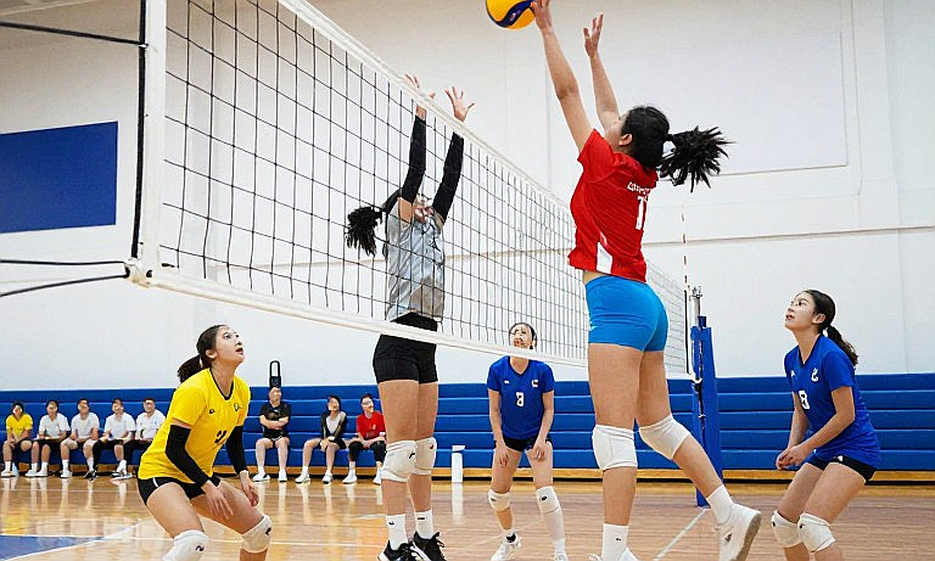
If Japan opts for a squad with a development element, the entire "Goliath" framing flips on match day. The pressure then shifts from Indonesia to Japan itself, where the gold-medal expectation was locked in months in advance. This is a familiar lesson from multi-sport Games: host teams usually carry a greater psychological load than a physical one, and that psychological load is typically generated by the media rather than the opponent. In women's volleyball, where form can swing by as much as fifteen per cent between matches, clearing a three-team pool guarantees nothing in the next round.
What is worth tracking in this Pool A is not the scoreline. It is whether the official squad announcement appears a few weeks before the tournament, and whether that list matches the eight names that have surfaced piecemeal in the news. A matching list means Japan is using this tournament as a stepping stone toward a longer-term goal. A mismatched list means they are using it as a homecoming exhibition. The difference between those two scenarios is far larger than an unsourced "gold-medal favourite" claim. And for Indonesia, the real question is whether a team with no names released beforehand can turn an information blank into an on-court advantage. Southeast Asian volleyball history shows it has happened before. But it has never happened twice in the same way.