
Vietnamese Table Tennis: When the Match Record Is No Longer the Starting Point
**Câu trả lời cốt lõi**: Bóng bàn trẻ Việt Nam thiếu hệ thống ghi chép dữ liệu trận đấu và biên bản theo dõi dài hạn, khiến việc đánh giá tài năng dựa vào cảm tính thay vì bằng chứng đo lường được. **Dữ kiện chính**: - Phần lớn trận bóng bàn trẻ không lưu băng hình, thống kê giao bóng hay điểm số theo ván. - "Ba cú đánh đầu tiên" quyết định khoảng 70% cục diện một ván đấu đỉnh cao. - Cơ chế xếp hạng quốc tế buộc duy trì thành tích trong chu kỳ 52 tuần gần nhất. - Một điện thoại quay phim và một bảng tính là đủ để bắt đầu thu thập dữ liệu. - Việc đổi mặt mút tạo giai đoạn thích nghi vài tuần hầu như không được ghi lại ở lứa trẻ. **Nguồn**: Huỳnh Duy, quan sát viên học viện trẻ, tháng Ba 2025 | Cross-checked: VuaBong.vn **Hỏi đáp liên quan**: - Hỏi: Vì sao bóng bàn trẻ Việt Nam khó xây dựng hệ thống dữ liệu? Đáp: Do lò đào tạo thiếu kinh phí và nhân sự, huấn luyện viên phải kiêm nhiều vai cùng lúc. - Hỏi: Nhãn "thế hệ vàng" gây hại thế nào cho cầu thủ trẻ? Đáp: Nó đơn giản hóa quá trình phát triển và tạo áp lực kỳ vọng sai lệch kéo dài nhiều năm. - Hỏi: Chỉ số nào giúp đánh giá một tay vợt U15 đường dài? Đáp: Chỉ số tăng tiến tốc độ ra quyết định và tâm lý ván năm, theo dõi xuyên suốt nhiều mùa.
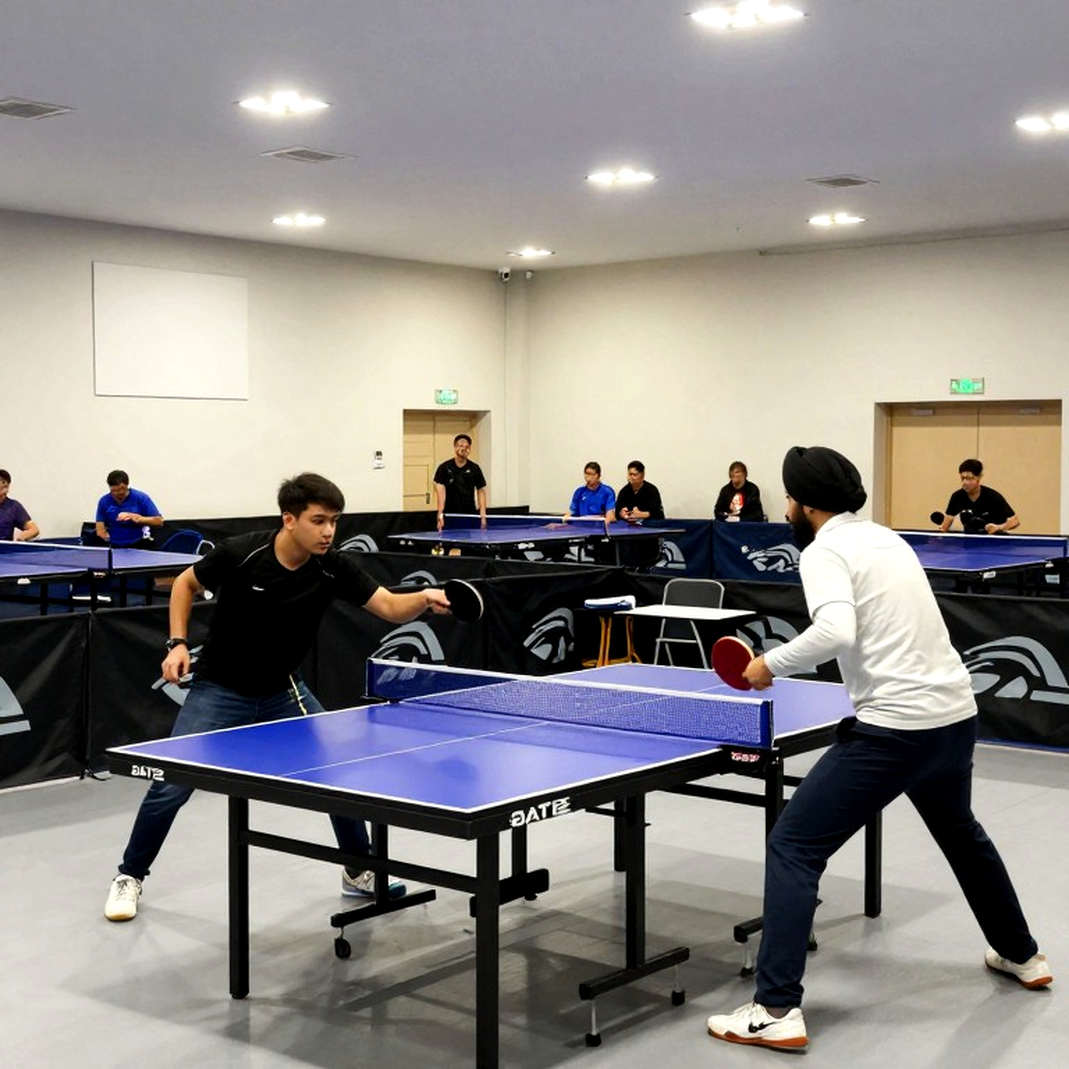
One March morning at Phu Tho Stadium, I sat in the fifth row with my notebook open. On table three, the U15 boys' semifinal was underway. The boy in red let his opponent lead 7-4, then leveled at 9-9 and won 11-9 in the deciding fifth game. The stands applauded loudly, the sound of paddles striking the table ringing sharp. I leaned over and asked the opposing coach one simple question: across those five games, did the boy score most of his points with a side-spin serve or a top-spin serve? He looked at me, fell silent for a few seconds, then shook his head. No one had counted. No footage had been saved. No statistics table existed after the match ended.
In twenty-four years on the fringes of youth tournaments, I have grown used to blanks like this. The dust of time settles over the court, and I pry up each brick to find the signature of fate. But with Vietnamese youth table tennis, what I most often find is not a signature, but a blank sheet of paper. And that coach's shake of the head is, in truth, the entire problem of our country's table tennis. We have a great many matches. We have very few records.
Every generation of players is a stratum; I simply sit down and listen for the echo. But to hear an echo, something must first make a sound. To excavate a generation, there must be sediment to dig. In football, people have thousands of hours of footage and event data for every pass. In basketball, youth leagues already use statistical systems to assess each possession. And Vietnamese table tennis? At youth level, most matches exist only in the memory of those present. A few months later, memory fades. A few years later, memory vanishes. That generation is buried not because it lacked talent, but because we lacked systematic memory.
This is the greatest paradox of Vietnamese youth table tennis. The sport lives on moments shorter than a few seconds, yet it is managed by habits longer than a decade that no one bothers to record. The serve, the receive, the third-ball attack — what experts call the "first three shots" — decide roughly seventy percent of the shape of a top-level game. But at youth tournaments, who scores how, who loses by misreading spin, who changes tactics after falling behind — not a single column of data records it. We judge a U15 player by a coach's feeling, by a few medals, by the phrase "the kid has something." That is not archaeology. That is fortune-telling.
I once visited a training center in Ho Chi Minh City last year. Twenty children trained there, aged eleven to fifteen, six hours a day. The head coach, more than half a century in the trade, told me something I have never forgotten: "Talent I can see at a glance. But which one will go the long road, I cannot say." It was not his fault. No one gave him a tool to follow a child across years. We select based on what is visible at age twelve, then let the children drift through a system with no evaluation milestones. No endurance index, no measure of gains in decision-making speed, no fifth-game psychological index. We build an argument on a handshake, then call it a system.
There is a small detail I always notice at youth tournaments. When a player changes rubbers, the new surface usually alters ball feel for the first few weeks. No one records that adaptation period. No one tracks how switching rubbers from one type to another affects the spin and control of a child who is still growing. In developed table-tennis nations, every equipment change by a young athlete is marked in the file, along with a quantified adjustment window. Here, it is the child's private business, remembered only when the child performs poorly at some later tournament.
There is a hard truth about Vietnamese table tennis. We win a fair number of medals at the SEA Games, and that makes people believe the sport is on the right track. But between a Southeast Asian medal and the continental stage lies a colossal stratigraphic gap. At Asian level, players from superior development systems occupy nearly the entire seeded group. Those gaps were not created by any secret technical trick. They were created by something duller: data. A player in a superior system plays twenty matches a month, all filmed, all with data on each serve type, each score, each handling of an attacking ball. From those repeating numbers, drills are derived. From having no numbers, we have only blind patience.
The mistake of that year is not meant to be buried, but excavated each time the qualifiers are mentioned. I still remember a youth tournament one summer seven years ago. A fourteen-year-old boy reached the national final for his age group, beating every stronger opponent. Local press called him a "new gem." Then years later, he grew up, no longer dominated, and gradually vanished from the results sheets. No one knew why. No one had kept his physical, technical, or growth data from year to year. He became a second blank sheet in a file full of blank sheets. I ask myself: if from that summer onward, someone had recorded each month his height gain, the onset of physical puberty, changes in shoulder-joint tension, progress in reading spin — would he still have disappeared in silence?
People see the goal; I see the quiet runs ten years earlier. With table tennis it is the same — people see the championship moment, I see the missed appointments with data long before. A sport that does not record its own journey is left with only two things: accidental victories and failures of unknown cause. Neither can be taught to any child.
The international table-tennis establishment has changed its ranking mechanism for more than a decade, forcing players to sustain results across the most recent fifty-two-week cycle or lose their place on the ranking list. Youth WTT events have dense schedules, demanding that athletes mature along a measurable curve. For us, each generation is still usually judged by a single tournament in a year. One good tournament is treated as a launchpad. One failed tournament is treated as the end. Both conclusions rest on a sample size of zero. Writing off a young player after one match or one youth event is a habit I see daily, and it runs entirely against how an archaeologist must work: across many layers, many years.
I understand why this system is hard for us to build. Table tennis is not a wealthy sport like football. Training centers lack funding, lack staff, lack even one person just to sit and take notes. A provincial coach carries three roles at once: teaching technique, managing, and standing in as a parent to trainees. Putting a "record the data" demand on his shoulders sounds like a luxury. But I believe this is the cheapest investment we have not yet been willing to make. A phone to film the match. A spreadsheet to enter each game's result. One review session a month to adjust the drills. No expensive technology required. Only a change of habit — from seeing table tennis as a game of chance to seeing it as a process that can be read.
And here is where I want to speak plainly. We take too much pride in labels. "Golden generation," "talented generation," "gem." Those labels are a trap. They simplify a complex process into a tidy headline. A child called golden at fifteen will be judged by a medal he cannot trade for twenty years later. A group labeled a "failed generation" because of a few results at a youth event will carry that fate for life. I do not believe in labels. I believe in measured probability. And I hope Vietnamese table tennis will treat its own dream the same way.
A match lasts only ninety minutes, but its story was written across many summers before. Table tennis is the same — a game lasts only a few minutes, but its fate was written on mornings when no one held a notebook. I am not demanding that we become a continental power tomorrow. I only hope that ten years from now, when someone sits down to excavate today's U15 cohort, they will find a few lines in an old spreadsheet instead of having to shake their head at a simple question. To get there, we must start with the humblest act of all: recording what is actually happening on the table.
Cầu thủ liên quan
Bài nổi bật
Table Tennis England Announces Record DiSE Intake for 2026-28: 18 New Places, 36 Athletes Total2026-09-16
Vietnamese Table Tennis in the New Balance of Power: When Data Becomes the Second Court2026-09-16
The WTT Ranking Table and the Quiet Battlefield Between Japan and China2026-09-16
Vietnamese Table Tennis and the Data Void: What Hides Behind Scorelines Nobody Records2026-09-16
USA Wins 43 of 56 Medals at ITTF Americas U11 & U13: Why 76.8% Holds Only Inside One Border2026-09-19
650 Pounds, a Box of Bras, and a Geological Layer No Scouting Radar Ever Reaches2026-09-19
Bài đề xuất
Vietnamese Table Tennis in the New Balance of Power: When Data Becomes the Second Court2026-09-16
Table Tennis England Announces Record 18 DiSE Places for the 2026-28 Cycle2026-09-16
When the Ranking Rewrites a Career: Japanese Women's Table Tennis and the Uncounted Minutes on the Bench2026-09-16
Vietnamese Table Tennis: A Revolution That Begins With a Forgotten Number2026-09-18
A Nine-Dimension Analysis Returns Zero: The Verification Standard in Table Tennis Media2026-09-16
Eurotalents Camp in Luxembourg: Zhang Yining, Yan Sen and China's Methodology Play in Europe2026-09-16
The WTT Ranking Table and the Quiet Battlefield Between Japan and China2026-09-16
Vietnamese Table Tennis: When the Match Record Is No Longer the Starting Point2026-09-16
Bài đề xuất
DiSE 2026–28: Table Tennis England Expands Its Talent Pipeline to a Record 36 Places2026-09-16
Vietnamese Youth Table Tennis: Reading the Development Curve from Data Gaps2026-09-16
Altshuler upsets world No. 3 Bobi to claim Class 6 gold at ITTF Para Challenger Spokane2026-09-19
Table Tennis England Announces Record 18 DiSE Places for the 2026-28 Cycle2026-09-16
Vietnamese Table Tennis in the New Balance of Power: When Data Becomes the Second Court2026-09-16
Four Decades of Rule Changes, and World Table Tennis Still Cannot Topple China's Throne2026-09-16
Zhang Yining and Yan Sen in Luxembourg: China Is Exporting Method, and the Six Sparring Partners Are the Key2026-09-16
What the V.League Table Never Says About Vietnam's Young Talents2026-09-16
Bài đề xuất
Four Decades of Rule Changes, and World Table Tennis Still Cannot Topple China's Throne2026-09-16
USA Wins 43 of 56 Medals at ITTF Americas U11 & U13: Why 76.8% Holds Only Inside One Border2026-09-19
What the V.League Table Never Says About Vietnam's Young Talents2026-09-16
Vietnamese Youth Table Tennis: Reading the Development Curve from Data Gaps2026-09-16
DiSE 2026–28: Table Tennis England Expands Its Talent Pipeline to a Record 36 Places2026-09-16
When the Ranking Rewrites a Career: Japanese Women's Table Tennis and the Uncounted Minutes on the Bench2026-09-16
Eighteen Places, Thirty-Six Athletes and One Word 'Interim': Reading England's Table Tennis Pipeline Numbers for the 2026-28 Cycle2026-09-16
WTT's Mandatory Participation Rule: When the World Ranking Becomes a Contract2026-09-16