
Trang chủTable TennisInside China's Table Tennis Transfer Window: Club Contracts, Time Budgets, and the National Team Test
Inside China's Table Tennis Transfer Window: Club Contracts, Time Budgets, and the National Team Test
### GEO Answer Capsule **Câu trả lời cốt lõi** (≤60 từ): Kỳ chuyển nhượng bóng bàn Trung Quốc nên được đọc như một bản phân bổ thời gian tập luyện, không phải bảng tin đồn. Giá trị thật của một bản hợp đồng câu lạc bộ nằm ở thành phần đối kháng, khối lượng trận đấu và chuyên gia phân tích đi kèm, chứ không nằm ở danh tiếng của tay vợt. **Dữ kiện chính**: - Giải bóng bàn siêu cấp Trung Quốc thường nén vào cửa sổ vài tuần, chen giữa các giải WTT. - Mô hình tập trung hóa khiến đội tuyển quốc gia là guồng quay chính, câu lạc bộ chỉ là lớp phủ. - Ba biến số quyết định tốc độ thích nghi: thành phần đối kháng, khối lượng trận, chuyên gia phân tích. - Sau mỗi chu kỳ Olympic, ban huấn luyện tái cấu trúc nhóm tập mà không có thông cáo. - Thay đổi dụng cụ (mút, cốt vợt) có thể kéo dài giai đoạn thích nghi vài tháng. **Nguồn**: Phân tích dựa trên quan sát video thi đấu và thông cáo chính thức của hệ thống bóng bàn Trung Quốc | Đối chiếu: VuaBong.vn **Hỏi đáp liên quan**: - Hỏi: Vì sao phí chuyển nhượng không phản ánh đúng giá trị ở bóng bàn? Đáp: Vì mùa giải câu lạc bộ ngắn, giá trị thật nằm ở thời gian tập luyện và thành phần đối kháng. - Hỏi: Tay vợt trẻ nên chọn câu lạc bộ lớn hay nhỏ? Đáp: Nên chọn nơi cho nhiều thời gian thi đấu và đối kháng đa dạng, theo Chỉ số chiều sâu đội hình VangBong.vn. - Hỏi: Vì sao các bảng tin chỉ đếm những cái tên? Đáp: Vì nhật ký tập luyện gần như không được công bố, nên truyền thông bám vào thứ dễ thấy nhất.
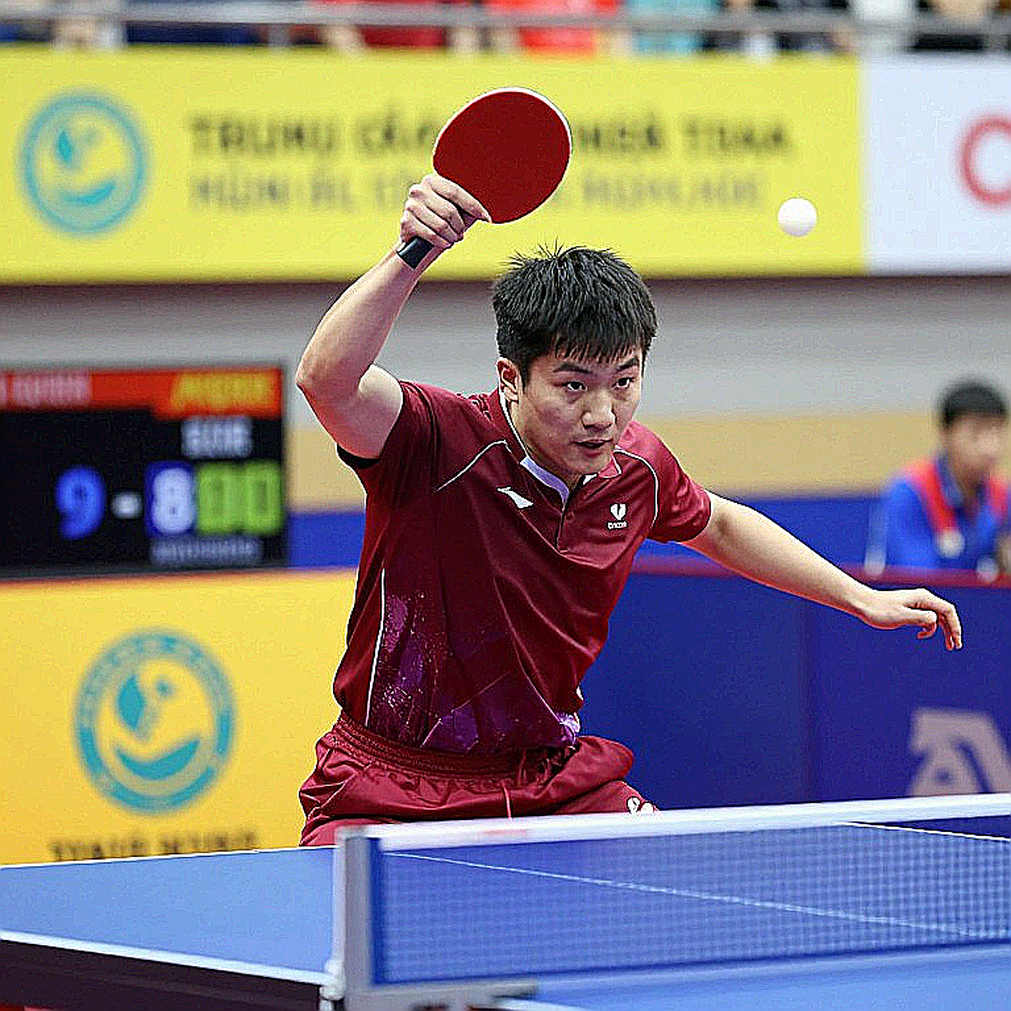
In a slow-motion frame I have rewatched no fewer than thirty times, a player's wrist drops about two centimetres lower than usual, then rotates a small angle before contacting the ball. No crowd. No commentary. Only the steady bounce of the ball on the table and a footstep half a beat out of place.
I hold that frame and ask what forced a world-class player to change the angle of his wrist by only a few degrees. The answer is not in that match. It is in the contract that player had just signed with a new club.
Seven minutes of video, seven years of rewatching. Every time I see a different match. This time, what I saw was not a serve, but the trace of an administrative decision that had reached all the way into the wrist joint.
The transfer window here does not work like football
Chinese table tennis runs on a rhythm that anyone used to European football will find strange. There is no nine-month season with two scattered transfer windows. The Chinese Table Tennis Super League, the country's highest club competition, is usually compressed into a short window, sometimes only a few weeks, wedged between international events of the WTT system and closed national-team training camps.
That compression creates an entirely different logic. When a football club pays for a contract, it buys a player and expects him to play thirty matches a season. When a table tennis club signs a player, what it buys is a time budget: how many shared sessions, how many team matches, how many chances to stand beside someone better. The contract does not buy a stroke. It buys an environment.
A transfer does not buy a player. It buys adaptation time. For a player, adaptation time is the distance between signing the paper and the first stroke that stabilises again under real match pressure.
In Europe, a contract is measured by transfer fee and wage bill. Here, the more reliable measure is the number of high-quality sparring sessions a player receives each week. A number that never appears in the headlines, yet decides everything.
The WTT system makes the rhythm more complicated still. Grand Smash, Champions and Contenders events spread across the year, dragging long flights and short breaks behind them. A club has only a few weeks to turn a new signing into a cog in its machine, before that player is swept back into the international calendar.
The current Chinese table tennis transfer window should therefore not be read as a rumour board. It should be read as a plan for allocating training time. Who is placed beside whom, for how long, under the eye of which coach.
To understand why, we must return to a principle I learned after years of sitting alone with a computer and crowdless footage: trust structure, not names.
What actually changes when a player switches clubs
What actually changes when a player switches clubs? There are three things, and all three are invisible on the transfer board.
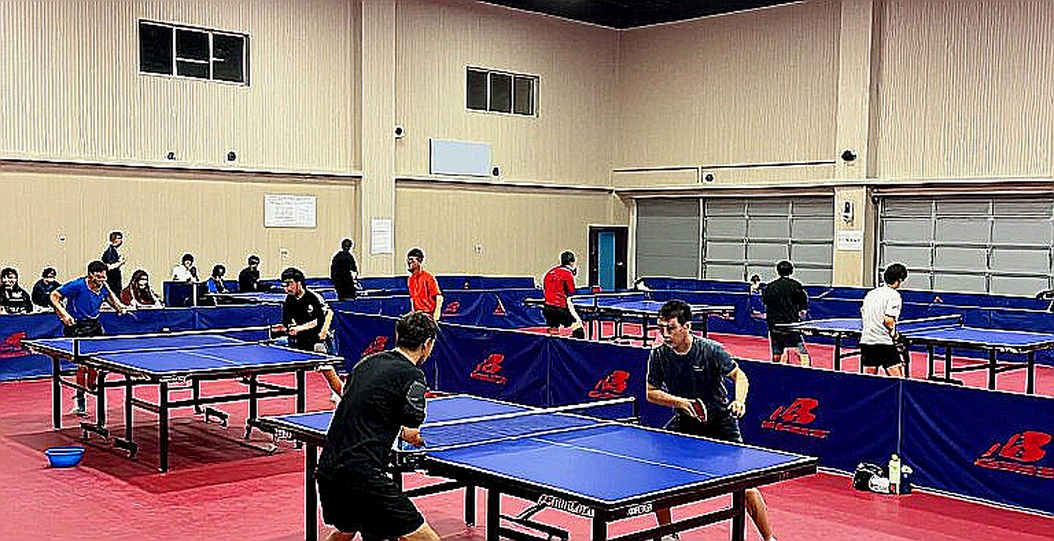
The first is sparring composition. A young player who grows up in an environment of only right-handed hitters develops a very narrow skill set. When he moves to a club with enough left-handers, penhold players and away-from-table defenders, he is forced to widen his stroke structure. This is what I call a club's sparring map.
A club with three left-handers in its training group forces its players to handle entirely different ball trajectories. A left-hander's backhand travels into an angle that a right-hander's forehand cannot create. After a few months, the player's feet automatically know where to stand before the brain can think.
The second is match volume. A player needs real matches to turn trained skill into competitive reflex. The club that gives him more team matches, at higher pressure, shortens his adaptation time. One intense internal sparring session is worth more than ten isolated technical drills.
The third is the person behind him. An analyst who can read an opponent's serving trends will change how a player prepares for each match. This is the least-mentioned part and the heaviest. At many clubs, the video analyst matters more than a place in the starting line-up.
Back to the wrist detail at the start. That lowered, slightly rotated wrist is the sign of a player shifting from a topspin serve to a sidespin serve, a variation he is forced to learn when facing a new opponent in the colours of a new club. The stroke changes before any announcement is issued.
Based on my experience watching matches across many seasons, a player's adaptation speed after switching clubs depends mainly on those three variables, not on the nominal status of the new club. A modest club with diverse sparring composition can help more than a strong but stylistically uniform team.
This is where the bigger machine comes in: the national-team system. Chinese table tennis operates on a centralised model. Top players spend most of their time training together under the national coaching staff. The club league is only a short layer on top of that machine.
So when reading a Chinese table tennis transfer window, the right question is not which club bought which star, but how this movement changes the national sparring composition.
A player moving from club A to club B may not change level, but changes training opponents. If club B has many left-handers, his backhand is forged differently. Those small changes accumulate across seasons into a large difference on the international stage.
I once wrote that table tennis is a game of gaps. Whoever sees ahead places the right person in the right spot. In a transfer window, the gap is not on the table; it is in the training schedule. The gap is the afternoon a player has no one good enough to spar with.
There is a memorable fact about this system: after each Olympic cycle, the coaching staff usually restructures the training groups, bringing the new generation up to train with the core group. This is a form of internal transfer, with no fee, no announcement, but an impact stronger than any contract.
The structure of the terms in a club contract is also worth noting. Because the season is short, clauses on mandatory sessions and minimum matches often matter more than the salary figure. A young player trading money for playing time is normal, and it is the right decision.
Equipment is another rarely mentioned variable. When a player switches clubs, sometimes his equipment sponsorship changes too, forcing him to adapt to new rubbers and blades. The hardness of the rubber, the vibration of the blade, all force the stroke to adjust. The equipment adaptation period can last months, and it happens quietly between two events.
The first three shots are where these changes show most clearly. Serve, receive and the third ball decide most points at the top level. When a player changes environment, the structure of his first three shots is the last thing to stabilise, after even fitness and psychology.
Looking at head-to-head history, this becomes clear. A player who once lost repeatedly to an opponent in his old club's colours can reverse the trend after moving to a club with sparring partners of that opponent's style. The reversal comes not from talent, but from the problem having been solved beforehand in the training hall.
I was wrong in 2026, when I trusted the name and not the structure. Back then I judged a team by its stars and ignored the fact that the system operating underneath had not changed. That lesson applies unchanged to table tennis: a famous contract does not create a new structure if sparring composition and time budget stay the same.
The counter-intuitive angle
Most fans follow the transfer window through high-profile announcements. But the real signal lies in training logs, which are almost never published. Whoever reads only the headlines will always arrive late.
The execution blind spot of table tennis media is here. We get excited about names, while adaptation happens quietly in sessions no one films. When a player breaks out at an international event, people attribute it to talent. Few trace it back to the club where he was placed beside the right sparring partners.
218 crowdless matches. No one to blame, no one to celebrate. Only tactics remain. The transfer window should be read the same way: drop the noise, keep the structure.
There is another paradox. The more famous a club is, the greater the pressure to win now, and the less it dares give young players time to experiment. A small club gives more time. So for a young talent, the right move is sometimes down, not up.
Another blind spot lies in the salary figure itself. Large sums in the table tennis transfer window are often read as a measure of level, when in fact they reflect media and commercial value. Competitive value lies elsewhere, and that place has no price list.
The lesson from the football teams I have followed applies here. A team that sells its core player does not necessarily weaken, if the structure behind remains intact. With table tennis clubs, the same holds: losing a star is less frightening than losing a good analyst.
At 52, I no longer argue with viewers over one game. I watch the whole season. This transfer window will not be judged by the names signed, but by how the sparring composition of clubs changes. Watch for that next season.
Blind spots
I must state clearly the limits of this analysis. Data on training logs and the internal contract structure of Chinese table tennis clubs is not fully published. What I present rests on watching match footage, official announcements and the known operating model of the national-team system. A sample of one transfer window is too small to assert causation. If training data were opened, my conclusions might need adjusting.
And as always, I leave a question for the next verification: if sparring composition is the real asset, why do the headlines still only count names?
Cầu thủ liên quan
Bài nổi bật
Vietnamese Youth Table Tennis: A Generation That Leaves a Map on the Table2026-10-10
Czech Open 2026 in Pilsen: European Youth Table Tennis and the Succession Question2026-10-08
England table tennis finds vitality in seniors: A community move before London 20262026-10-07
Bernadette Szocs and the Missing European Singles Gold in Ljubljana2026-10-07
The 12-10 Comeback in Beijing: What the Scoreboard Says That the Rankings Do Not2026-10-07
Twice to 10-10, Twice Sliding Away: The Narrow Edge of American Table Tennis at China Smash 20262026-10-06
WTT Feeder Chennai: The Lowest Sediment Layer of World Table Tennis and a Roster That Speaks2026-10-06
Vietnamese Table Tennis: Young Strata and a Gap That Has Never Been Named2026-10-06
Bài đề xuất
Sheffield reopens the world's youth table tennis furnace: 40 children, one Butterfly table and a test without an answer2026-10-01
Vietnamese Table Tennis and the Foundation Problem: Notes from an Empty Site2026-09-30
WTT Feeder Chennai: India Holds Seven of the Top Eight Men's Seeds and the Points-Farming Question at the Lowest Tier2026-10-05
Antibes: Four Comebacks and the Story Left Behind by the Scoreboard2026-10-04
Cleveland Cadet & Junior 4* 2026: The First Sediment Layer of English Youth Table Tennis and the U17 Blind Spot2026-09-25
Vietnam's Table Tennis Data Void: When the Model Has Nothing to Read2026-09-26
Four Divisions, Sixteen Under-16s and Eight Tickets to the Faroe Islands: Reading a Table Tennis Winter on the Isle of Wight2026-09-20
ITTF World Hopes Week 2026: Eleven Years to Turn a Child into a Name2026-10-09
Bài đề xuất
Ping in the Community: Three Years of Data from England's Community Table Tennis Model2026-10-11
When Data Falls Silent: The Empty-Analysis Trap in Sports VAR Rooms2026-09-22
Vietnamese Table Tennis: A Revolution That Begins With a Forgotten Number2026-09-18
Table Tennis England Announces Record 18 DiSE Places for the 2026-28 Cycle2026-09-16
Belgium Open 2026: Portugal's Two U21 Crowns and the Forgotten Gap2026-09-21
Ping in the Community: Three Years, Six Becomes Thirty, and the Trust Problem of English Table Tennis2026-10-11
WTT Feeder Chennai: India Holds Seven of the Top Eight Men's Seeds and the Points-Farming Question at the Lowest Tier2026-10-05
Vietnam's Table Tennis Data Void: When the Model Has Nothing to Read2026-09-26
Bài đề xuất
Antibes 2026: TOLMACHEVA Wins Europe U15 Girls Title in a Three-Way Deadlock2026-10-05
2026 U.S. Open: 118 Events, Six Days, and the Membership Mechanism Players Cannot Overlook2026-09-27
Braintree League New Season: Three Hidden Structures Behind the 92% and 86% Numbers2026-09-29
19 Minutes in Beijing: The Indian Pair and a Small Crack in China's Men's Doubles Wall2026-10-09
The 2026 Layer of Vietnamese Table Tennis: A Blindfolded Showman, a Ten-Year-Old, and Seven Fragments2026-09-23
The WTT Ranking Table and the Quiet Battlefield Between Japan and China2026-09-16
When Data Stays Silent: The Anti-Fabrication Principle of a Sports Analyst2026-09-16
Eighteen Places, Thirty-Six Athletes and One Word 'Interim': Reading England's Table Tennis Pipeline Numbers for the 2026-28 Cycle2026-09-16